These Glass Blocks Were Supposed to Go Into a Wall, but She Had a Different Idea

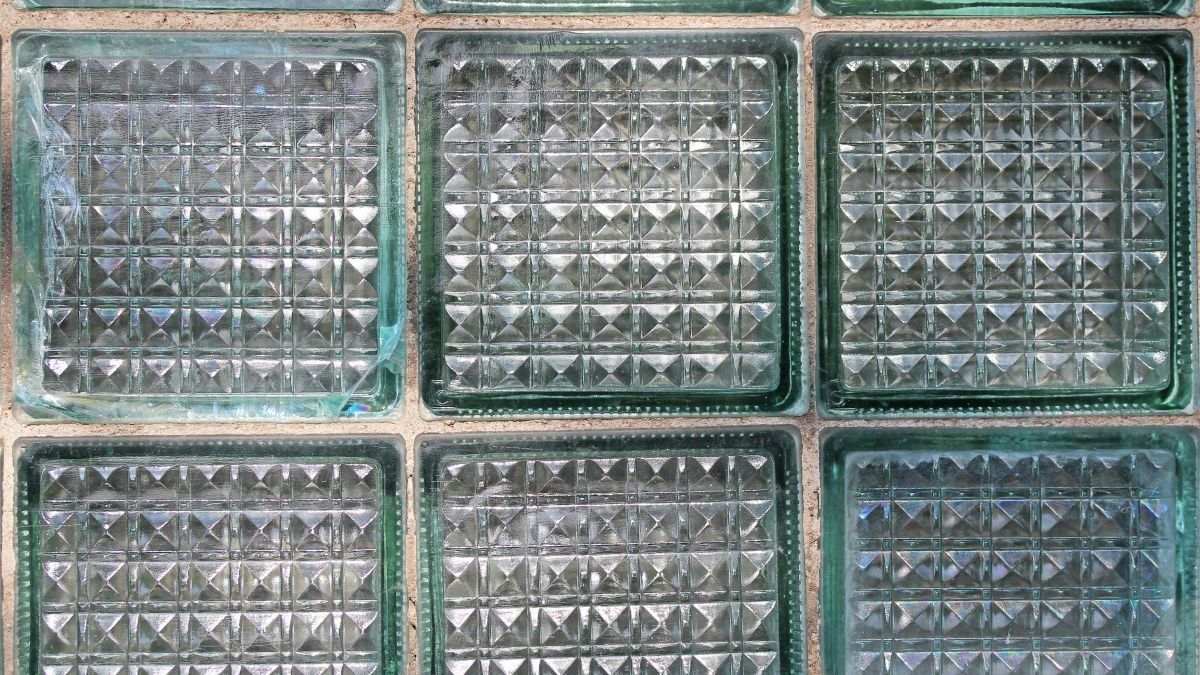
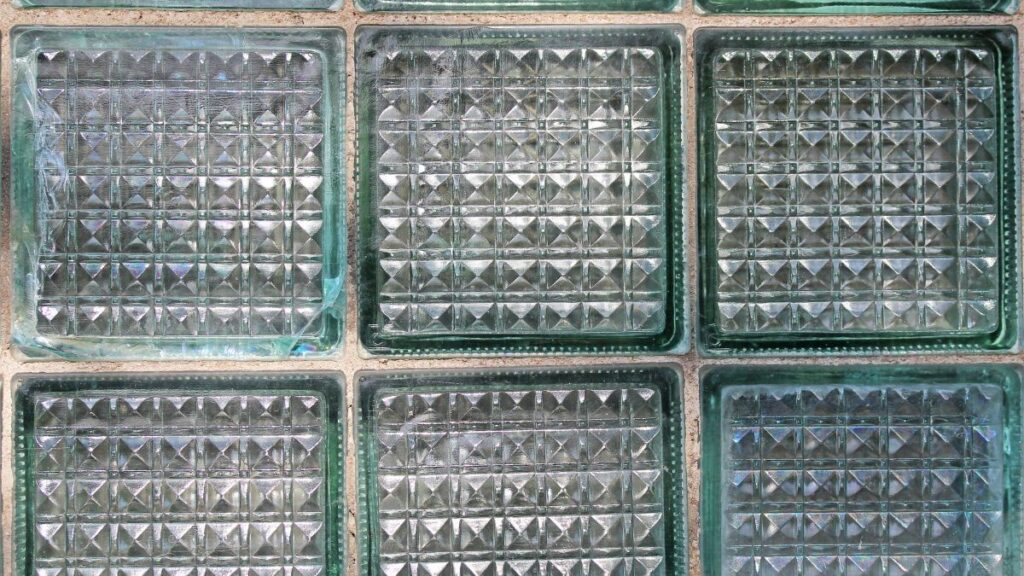
Glass blocks are used in bathroom walls, partitions, and windows, where their thick surfaces allow light through while obscuring the view. Their square shapes and textured faces also make them suitable for furniture, without cutting the glass or adding a wooden frame.
A DIY project shared by Instagram creator @mansremonts shows how individual glass blocks can become a transparent side table using construction adhesive. The finished piece has a solid glass base and a square top, with enough surface space for a vase, small planter, or books.
Glass Blocks Form the Base and Tabletop
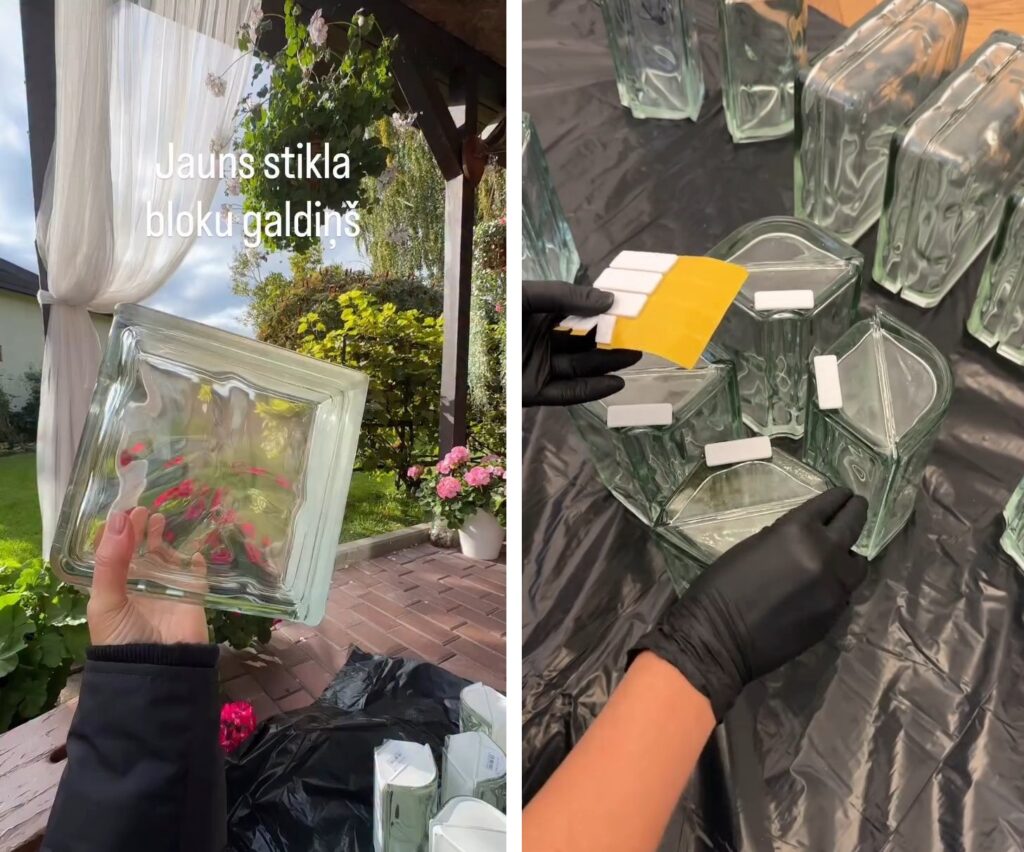
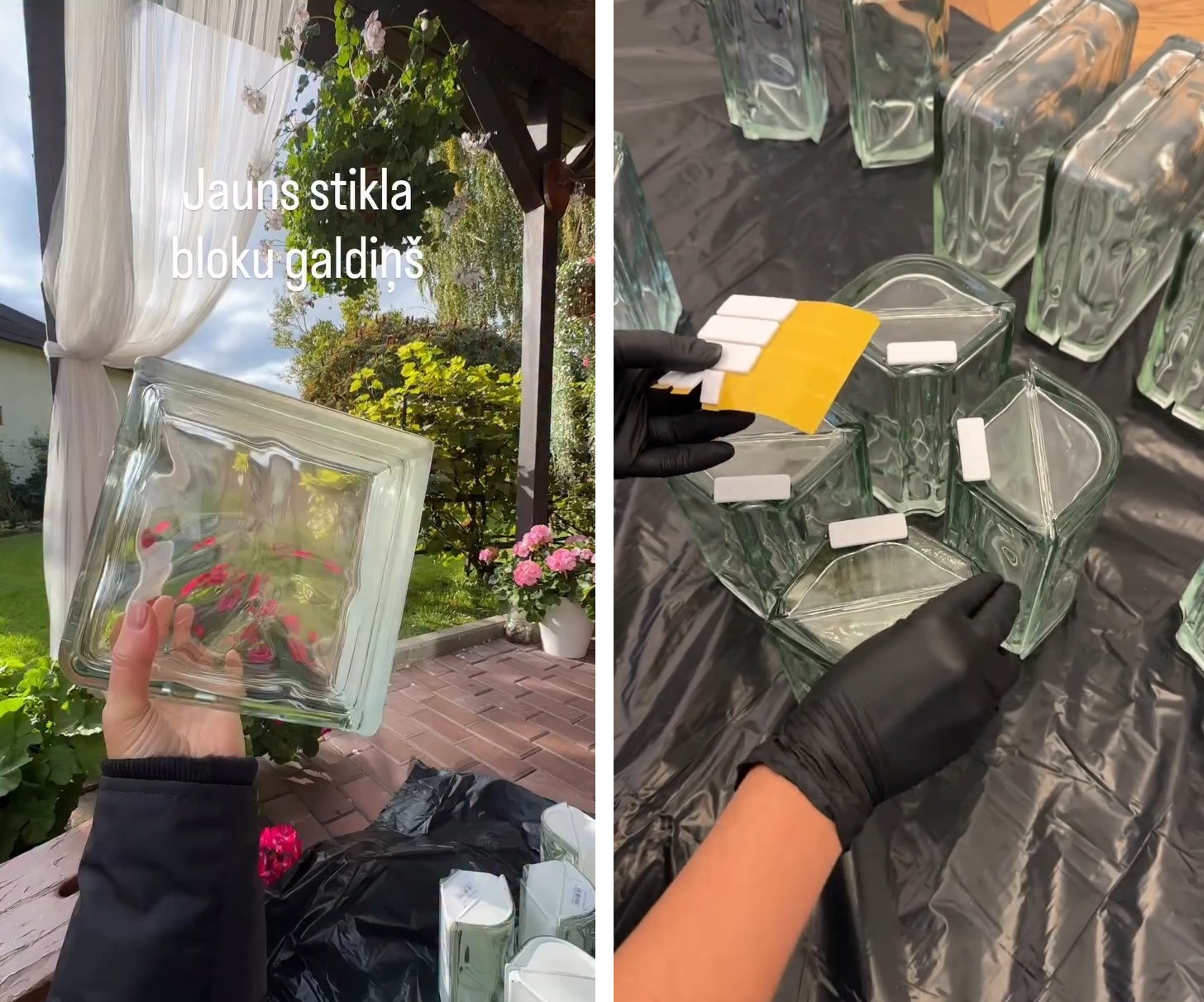
The project starts with clear glass blocks that have a pale green tint around their thick edges. Each block has a hollow center, sealed glass faces, and a shape that allows it to stand upright or rest on its side.
The blocks are arranged into two sections: a narrow vertical pedestal and a wider square top. The design uses the same material throughout, with no separate tabletop or supporting legs.
Adhesive Pads Hold the Glass Blocks in Position

Small white adhesive pads are placed between the glass pieces during assembly. The blocks are positioned with their edges aligned, creating the square and rectangular sections needed for the table.
The thick glass edges remain visible where the pieces meet. Their textured surfaces catch reflections from different directions once the blocks are joined.
Construction Adhesive Secures the Blocks
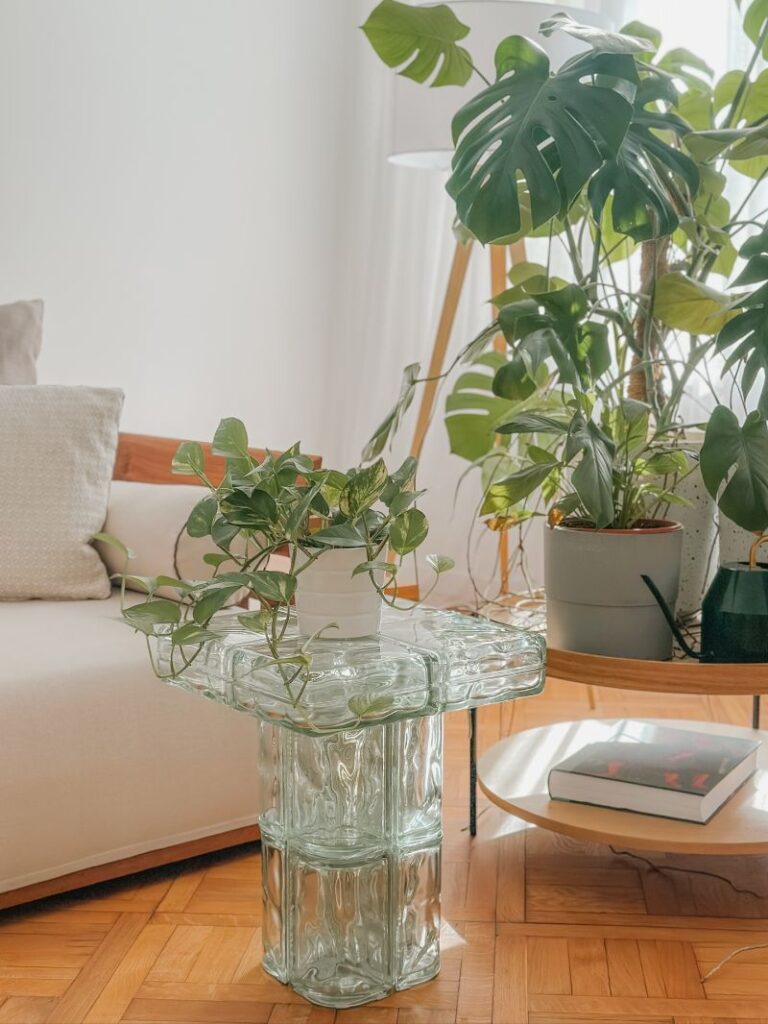
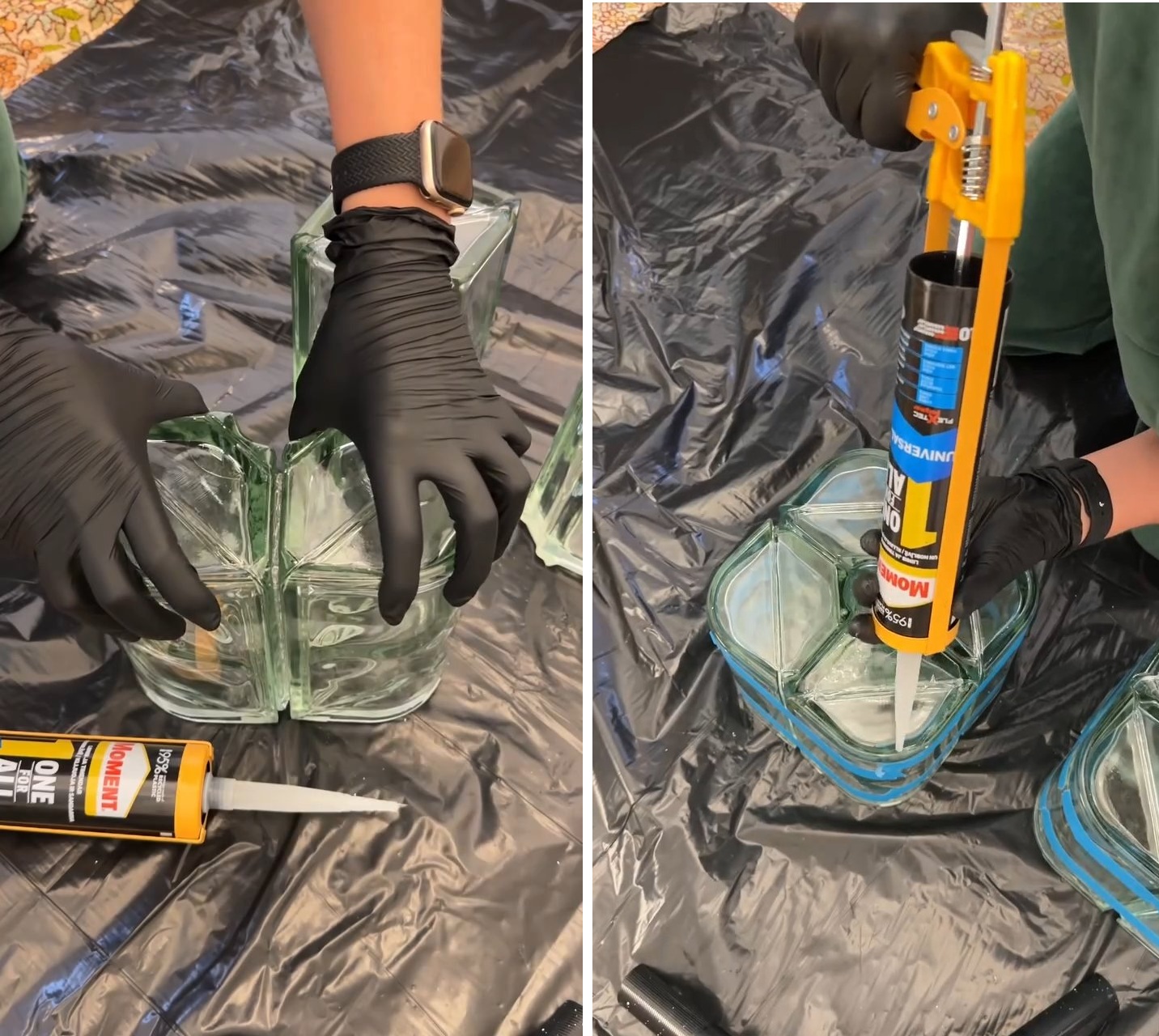
The creator uses Moment One For All construction adhesive to join the glass blocks. She brings the pieces together and presses them into position, forming the sections that will support the tabletop.
The blocks require a firm bond because the table depends on the adhesive joints rather than screws, brackets, or a frame.
The Glass Sections Are Joined Into One Table
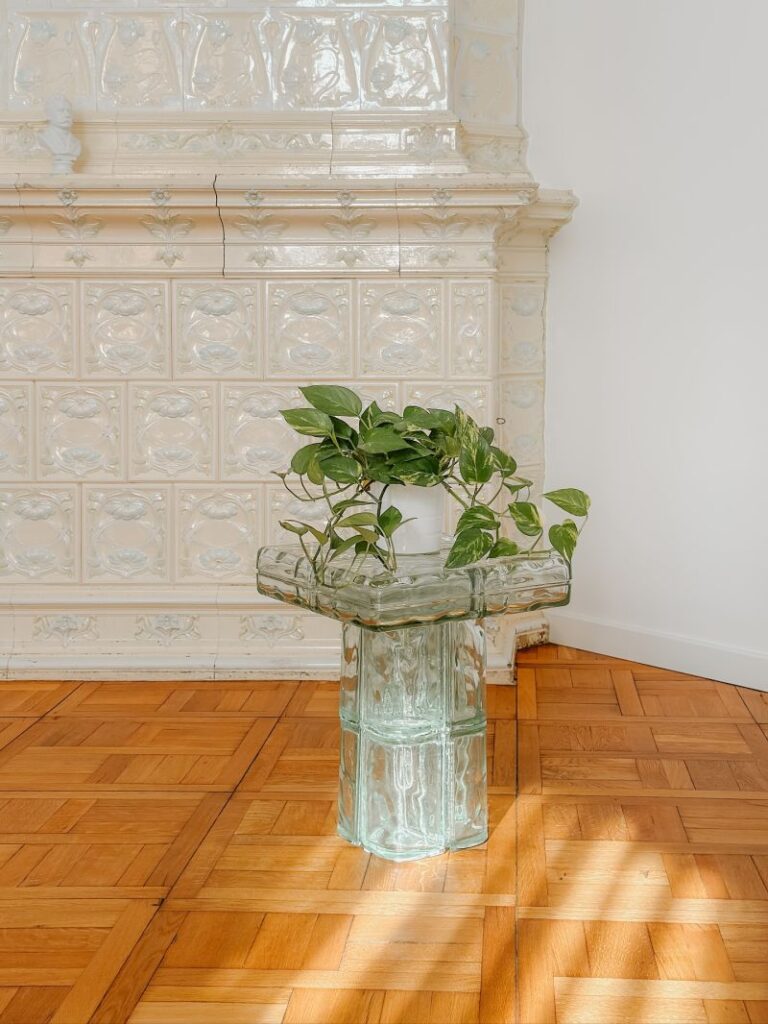
The same construction adhesive is applied inside the joints as the glass sections are assembled. Blue tape holds the outer edges in alignment during this stage.
Once the adhesive cures, the lower blocks form a vertical column beneath the wider top. Anyone attempting this project should check that the adhesive is rated for glass and structural loads, and confirm the finished table is stable before placing objects on it.
The Finished Side Table Has a Transparent Pedestal
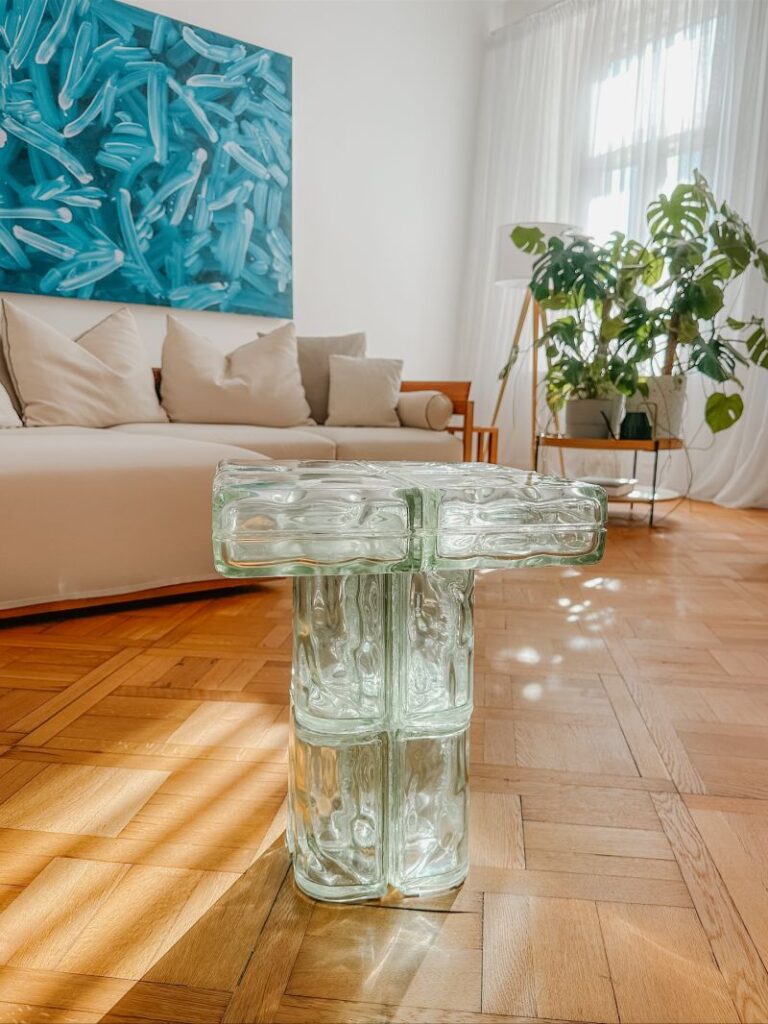
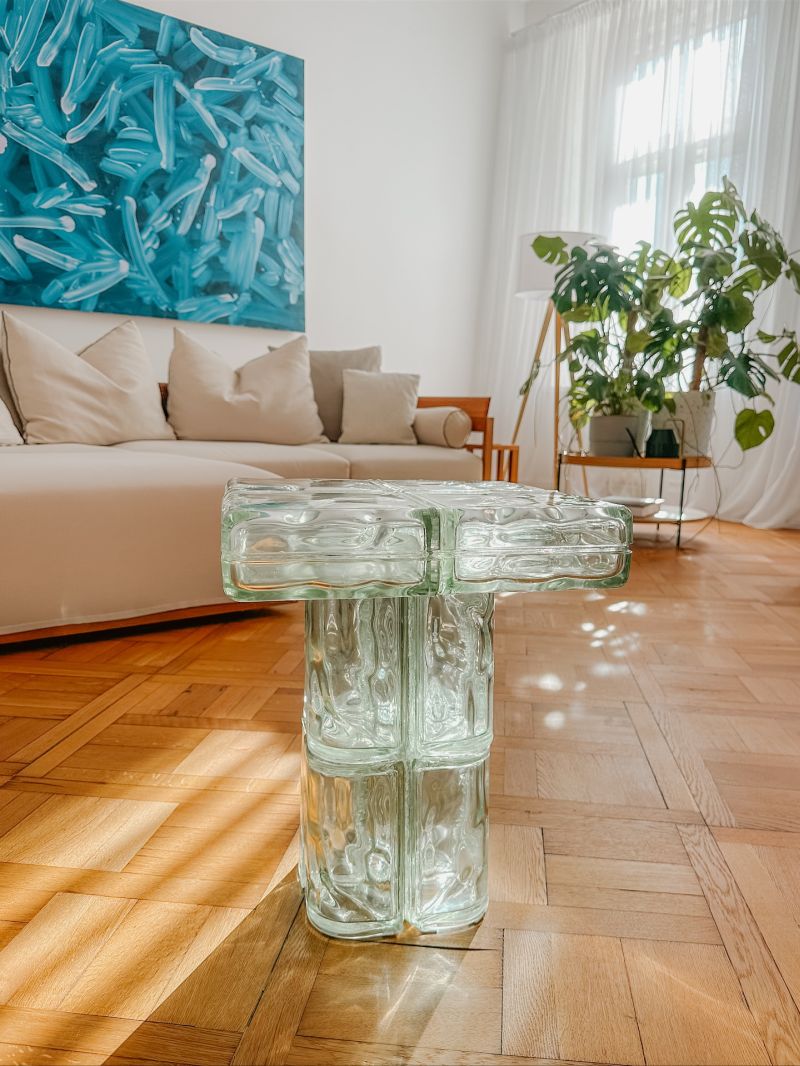
The completed table has a T-shaped profile, with a compact glass pedestal supporting a broad square surface. The top is made from joined blocks, leaving visible seams across the glass.
Sunlight passes through the hollow sections and reveals the molded patterns inside each block. The pale green edges contrast with the oak parquet floor and cream sofa, while the thick glass gives the small table a substantial appearance.
The Glass Table Can Hold Plants or a Vase
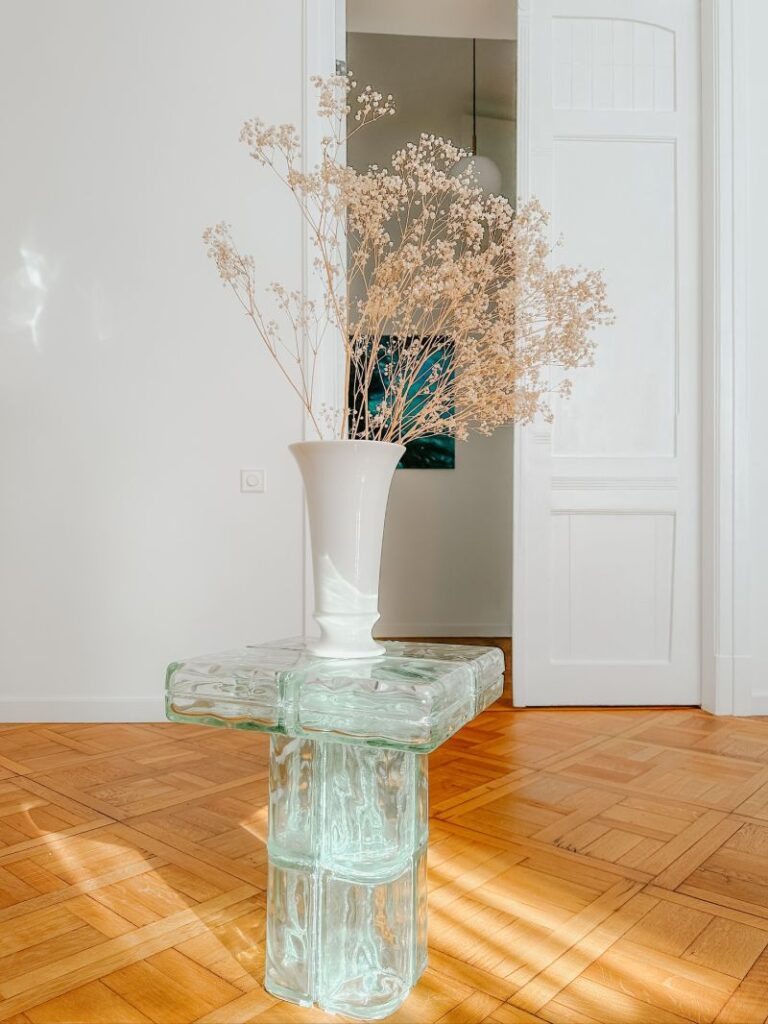
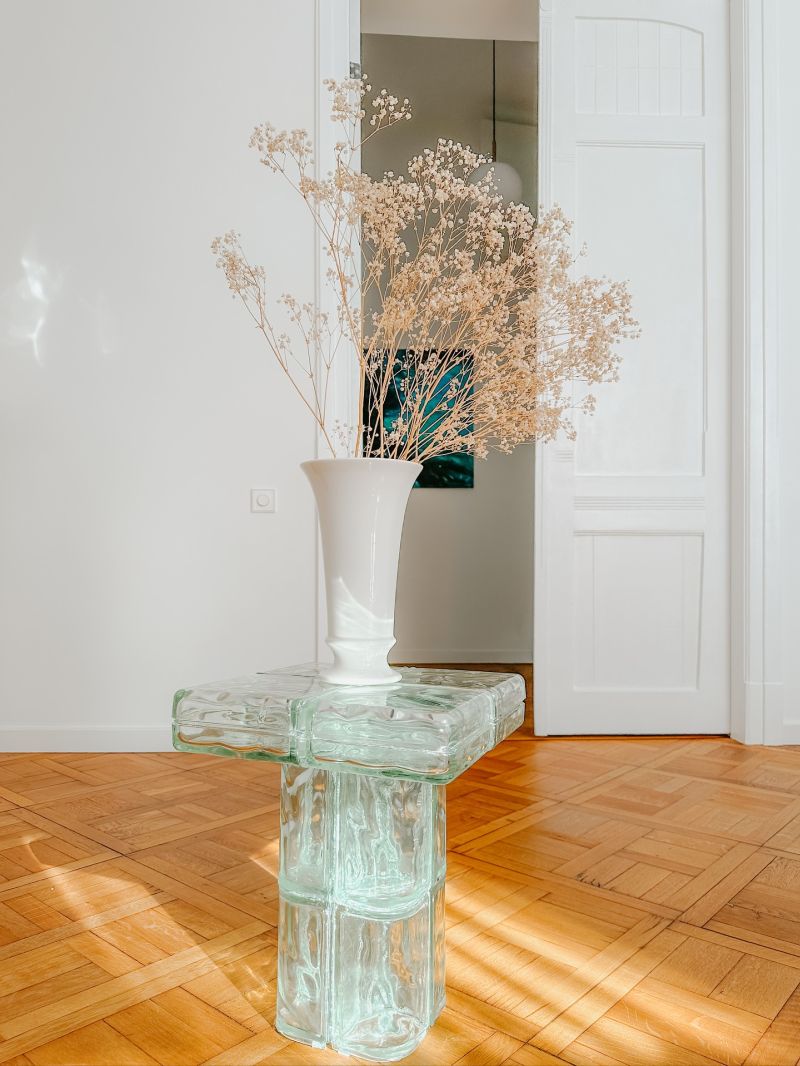
In another arrangement, the finished table holds a tall white vase filled with dried stems. The clear base remains visible beneath the arrangement, while the broad top provides space for the vase without covering the glass edges.
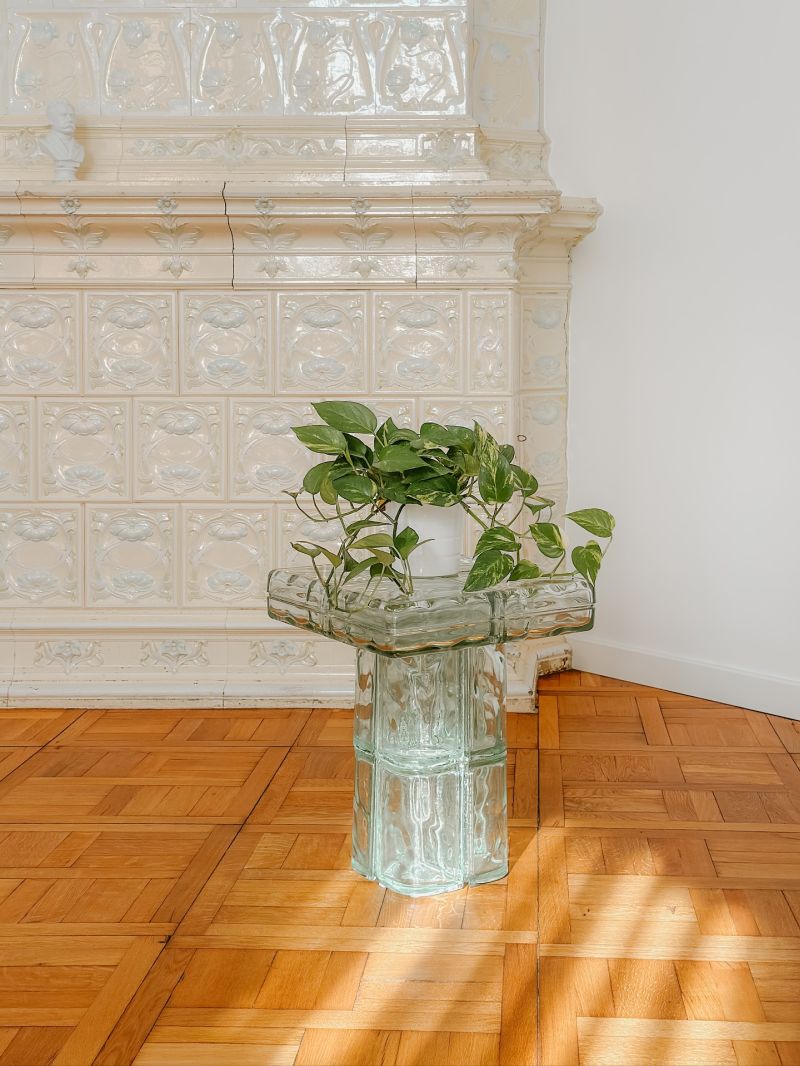
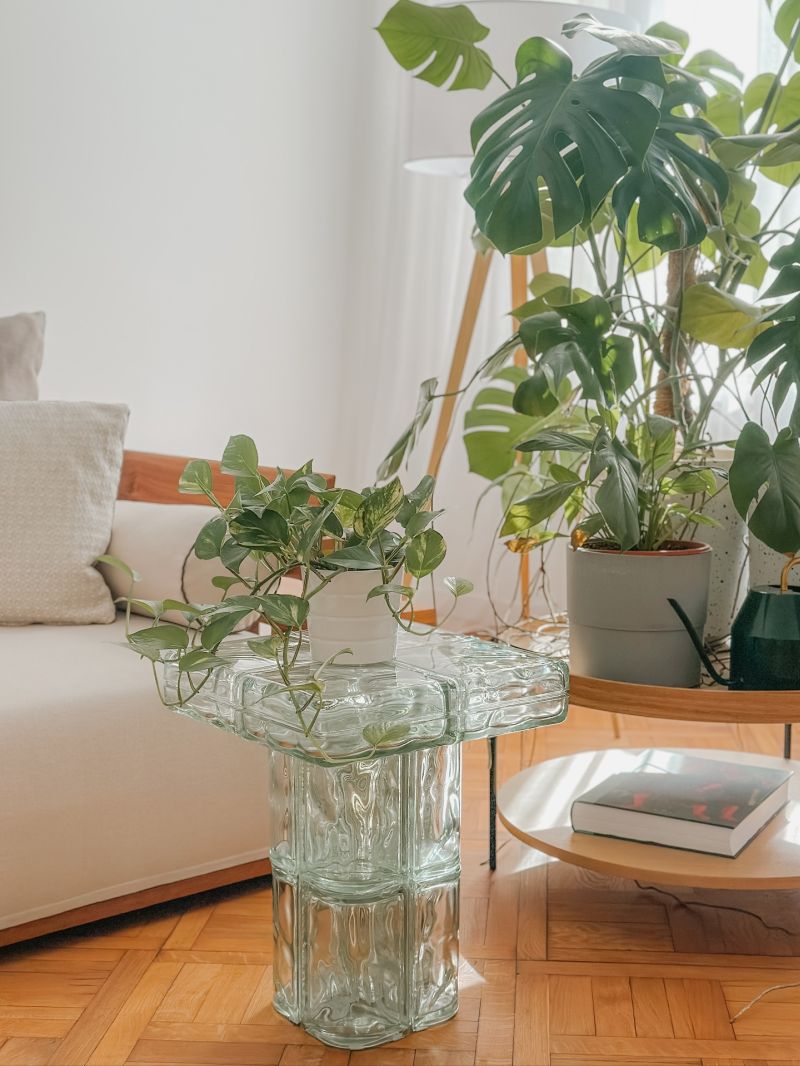
The creator also displays the table with a small potted plant and trailing greenery. Both arrangements show how the same piece can serve as a plant stand or accent table without changing its construction.
Would you use glass blocks to build a side table, or keep them for walls and partitions?
Image credits belongs to @mansremonts