She Picked Up a Pinecone Outside and Turned It Into a Fall Owl

Updated on September 12, 2026

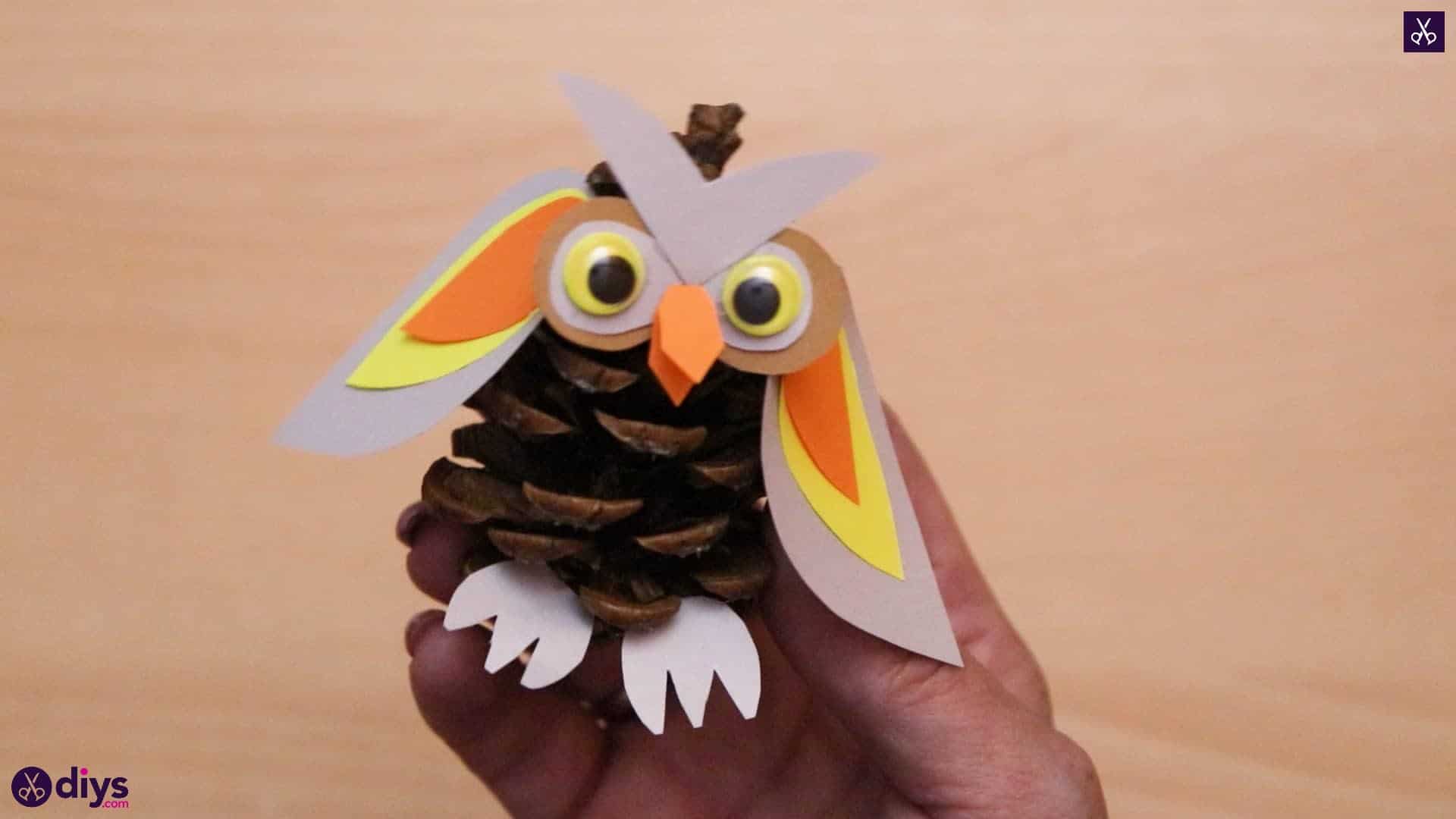


Pinecones that drop from trees can become craft supplies instead of staying on the ground. Their stacked scales already resemble rows of feathers, making the shape a fit for a small owl.

This fall craft uses one pinecone as the body, then adds construction-paper wings, feet, eyes, brows, and a beak. Two googly eyes finish the face, while gray, yellow, and orange paper bring color to the brown cone.
Most of the work happens before anything touches the pinecone. Small paper shapes form each feature, then glue brings the pieces together around the cone.
Paper Scraps Become Owl Features

Gray, brown, yellow, and orange construction paper provide the parts for the owl. Curved shapes, circles, pointed pieces, and narrow strips are cut from the sheets.
Some pieces are cut in pairs so both sides of the owl match. Yellow and orange sections will form layers inside the wings.
Gray Paper Forms Feet and Feathers

Larger gray pieces create the outer wings, while smaller cuts form the feet and parts around the eyes. Small notches cut into the feet create three pointed toes.
Each shape has a separate role, even though the loose pieces do not resemble an owl yet.
Cut Pieces Build a Full Set of Owl Parts

Pairs of gray, yellow, orange, and brown shapes sit beside the pinecone before assembly. The wing pieces range from large to small so three colors can stack on each side.
Round pieces frame the eyes, while an orange folded shape becomes the beak. Two small gray feet complete the set.
Three Paper Colors Stack Into Each Wing

A yellow section sits inside the larger gray wing, followed by a smaller orange piece. Glue holds the three layers as one unit.
The finished wings bring broad areas of color to a craft built around the dark brown pinecone.
Paper Feet Attach Near the Pinecone Base

Small gray feet attach near the bottom of the pinecone with their cut toes facing out. The cone remains exposed above them, allowing its scales to form the owl’s chest.
Using the pinecone as the body also means no separate torso needs to be cut from paper.
Googly Eyes Give the Pinecone a Face

Layered paper circles and googly eyes attach near the top of the pinecone. A gray brow piece crosses above them, while the orange beak sits between the eyes.
Those few additions change the cone from a natural object into a recognizable owl face.
Pinecone Scales Become Rows of Feathers

Once the wings, feet, eyes, brow, and beak are in place, the pinecone takes over the center of the design. Its overlapping scales resemble the feather pattern across an owl’s body.
The cone does not need paint or another covering. Its original brown surface stays exposed between the paper details.
Pinecone From the Ground Becomes a Fall Owl

Gray wings frame the cone, with yellow and orange layers adding color on both sides. Wide eyes and a small folded beak complete the face.
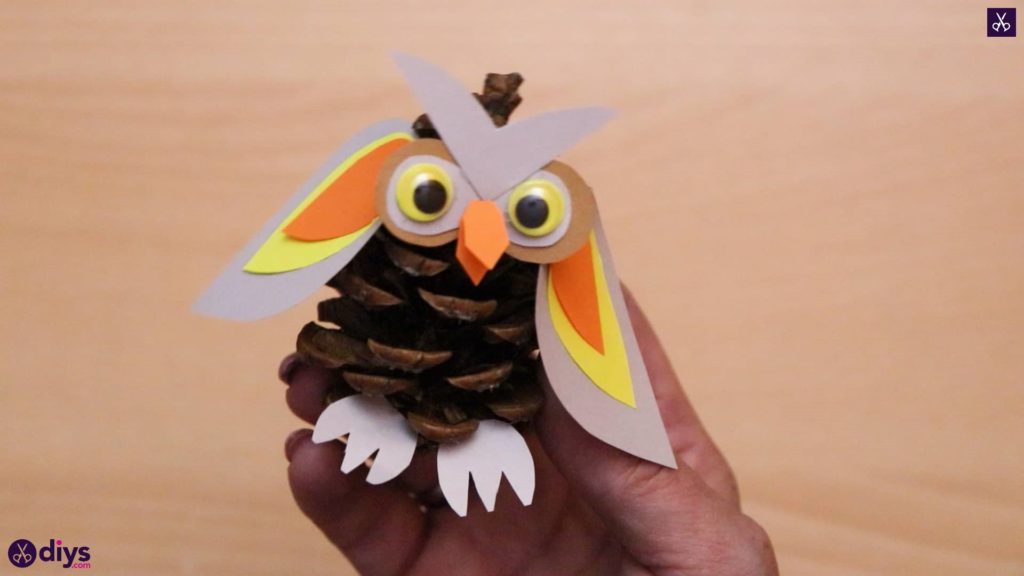
The finished owl still leaves most of the pinecone visible, so there is no hiding where the craft began. Would you have seen an owl in a pinecone before the paper pieces went on?