Putting a ball of aluminum foil in the washing machine: what it’s for and why it’s recommended

Updated on November 12, 2026

The clothes go in, then the detergent. Before the washer door shuts, someone reaches for one more thing. They tear a sheet from a roll of aluminum foil, squeeze it into a ball and drop it into the drum. The little silver ball looks out of place among the clothes. In videos showing the trick, it goes in quite deliberately.
It’s the sort of thing you’d ask about if you watched someone do it. What would make you reach into the kitchen drawer before starting a load of laundry? The clue comes later, when the load is warm and you start pulling it apart.
The problem people are trying to get ahead of
Pull a sweatshirt out of the dryer and the sock stuck inside the sleeve might come with it. Peel the two apart and you may hear a faint crackle. That’s static cling, and it’s what people are trying to cut down on when they add a ball of foil to the laundry.
When fabrics rub together, electrons can move from one garment to another. One piece can end up with more electrons and the other with fewer, leaving them with opposite charges that attract. Those charges can hold two light pieces of fabric together. If the charge moves suddenly when you touch the clothes, you can feel a little zap as well.
Dry air lets that charge linger. Polyester and nylon tend to hold on to it, so the effect can be especially noticeable on workout clothes. If you hear more crackling when you unload the dryer in winter, dry indoor air can be part of the reason.
Why people reach for kitchen foil
Think of a skirt that keeps clinging to your legs. One way to release some of the charge is to pass a metal hanger over the fabric. The metal gives the charge a path to move. Whirlpool includes the hanger trick in its guide to static cling.
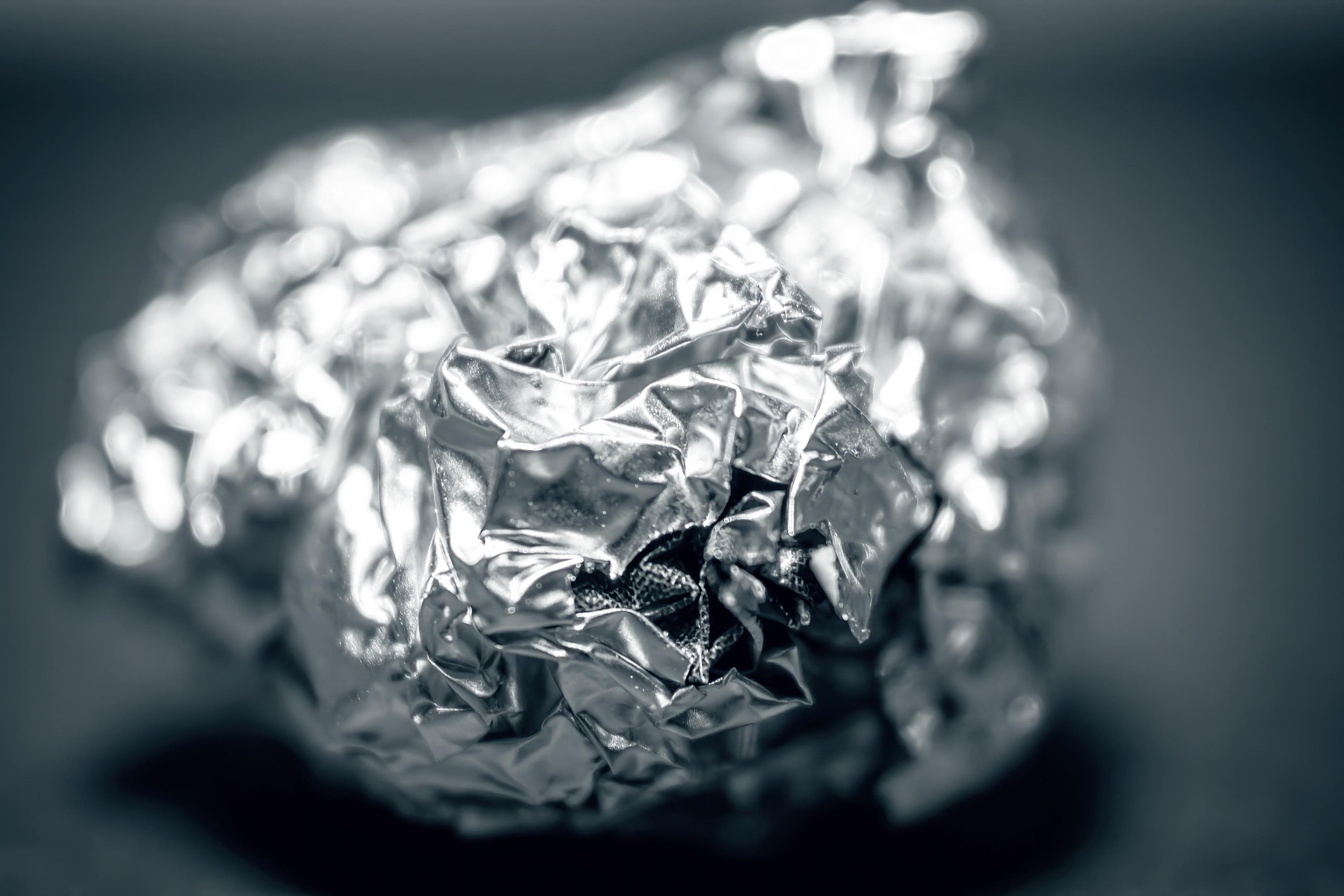
The foil ball takes that same idea into the laundry drum. Aluminum conducts electricity, and a sheet scrunched into a ball can roll around and touch different garments as the drum turns. People who try it are hoping those brief contacts let some of the charge move off the fabric.
That helps explain the appeal. A roll of foil is something you might already have in the kitchen, and it takes seconds to shape a piece of it. For someone looking for a way to deal with cling without adding a scented product to the load, that’s an easy idea to try.
Why the foil ball also turns up in the dryer
The washing machine is where most things go into a load, so it’s a natural place to think of adding the foil. The detail that changes the picture is moisture. While the clothes are wet, electrical charge can dissipate more readily. As the fabric dries and keeps rubbing against the rest of the load, that charge has more opportunity to build up.
That’s why some people put the ball directly in the dryer. They’re trying to bring the foil into contact with the clothes at the point when static tends to build. Michelle Feng of Hisense explained the role of moisture and pointed out where loose foil can end up in a washer, including the filter or drain, in an interview with Tom’s Guide.
How people shape the foil ball
In the dryer version, people press the foil into a tight ball a couple of inches across and tuck in the loose corners before it goes in with the clothes. The smooth surface matters around hems, loose threads and delicate fabrics, where a rough edge could catch. Some reuse the ball for several loads and replace it once it starts shedding bits of foil.
The payoff people are picturing is a small one. You lift out a fleece jacket, shake it open and it falls away from the rest of the load without that dry little crackle. That’s the trick.